Thursday, 30 December 2021

Call for Abstracts: Visibility of Women in the History of Academia (special issue of "medien & zeit"). Deadline 28 February 2022

This issue of "medien & zeit" focuses on developments of inequalities in the disciplinary genesis of communication studies, in particular in the field of communication history, but also in associated disciplines like social sciences and humanities, (contemporary) history, sociology or philosophy. We invite contributions to reflect on the history of disciplines and subjects in relation to gender constructions and the gendering of academic knowledge production. The level of actors is sought to be considered just as much as the structural level.


Visibility of Women in the History of Academia

“Intellectuality is a privilege of men. If a woman is equally intellectual, then she lacks something else. She is then no longer a woman.” - this quote by a German professor was printed among many similar ones in 1960 in a habilitation thesis on the state of German universities. It testifies to the oppressively androcentric perspective that prevailed at universities for women. Since then, female scientists have undoubtedly achieved more scope of action, but no end is in sight to structural marginalization and stereotyping.


This issue of medien & zeit focuses on developments of inequalities in the disciplinary genesis of communication studies, in particular in the field of communication history, but also in associated disciplines like social sciences and humanities, (contemporary) history, sociology or philosophy. We invite contributions to reflect on the history of disciplines and subjects in relation to gender constructions and the gendering of academic knowledge production. The level of actors is sought to be considered just as much as the structural level.


One can assume that the historical representation of the scientific fields is based on hegemonic structures that are male-dominated. Women usually appear at most as exceptional figures, their substantial contribution in the history of disciplines is hardly recognizable in the corresponding literature. The reasons for this are manifold, embedded in overall social power structures and specifics of the scientific system - but far too little light has been shed on the subject. (Queer)feminist and instersectional approaches are challenging such patterns of interpretation and narratives based on patriarachal structures. This questioning of structures entails the engagement with thematic fields and perspectives, which in turn struggle for attention and recognition in a broad-based knowledge culture.


Certainly, marginalized social identities have to be made visible - but this alone is not enough. At the same time, there is a need for a fundamental debate on structural discrimination, its far-reaching implications for actors, social practices, the consolidation of institutionalized knowledge, and intra-scientific processes. We therefore invite original contributions on this topic, including theoretical as well as methodological considerations and case studies from feminist, queer, and intersectional perspectives. Topics of interest include:


- Dealing with narratives about the discipline and about researchers: what role does gender play in meta-narratives about the history of the discipline and about academic achievement? What gaps, what shortcomings emerge from this? What narratives exist about female and non-binary scholars? What gendered attributions exist and have existed about scholarly quality, recognized methodologies and focal points in research?

- Segregating structures in the field: what lines of development can be traced in the history of disciplines and subjects? What upheavals and what continuities are to be seen in structural discrimination and marginalization? Which issues are set by which groups and which remain open?

- Academic resistance movements: what protest and resistant practices by academics have there been and are there against disadvantage? How were the movements, persons, demands or concepts dealt with? What consequences, measures or actions followed such protests?

- Visibility, recognition and power: what role did gender play as another social category as well as gender in intersection in visibility and influence in research fields, research topics, theories and methods? What did this mean for university political voice, participation in power? Which actors are attributed power of definition?


Submissions in English or German language are welcome. Submissions of abstracts (no more than 10.000 characters) outlining a prospective submission will be subjected to review by the academic editors of the issue. Based on this, authors will be invited to develop full papers (25.000-40.000 characters including title, abstract, tables, figures, and references list). All full papers will undergo rigorous double-blind peer review. During a potential revisions stage, after peer-review, authors can extend the article length to a maximum of 8,000 words in the light of reviewers’ and editors’ suggestions. medien & zeit is fully open access and does not charge Article processing fees from its authors.


Submission of Abstracts: 28 February 2022

Submission of Full Papers: 31 July 2022

Publication of Issue: Issue 2 of 2023


Please submit abstracts to Christina Krakovsky per email:

Christina.Krakovsky@gmail.com


Marius Turda (ed.) A Cultural History of Race. 6 vols. London etc. Bloomsbury Academic 2021. ISBN 9781350067578


Description

How have definitions of race varied and changed over time? What impact have religion, science and politics had on race throughout history, and how has our concept of it been changed as a result? These ambitious questions are answered by 61 experts who - drawing on perspectives from history, sociology, anthropology, literature and medical humanities - deepen our understanding of how race has developed conceptually and in reality between antiquity and the present day.

Individual volume editors ensure the cohesion of the whole, and to make it as easy as possible to use, chapter titles are identical across each of the volumes. This gives the choice of reading about a specific period in one of the volumes, or following a theme across history by reading the relevant chapter in each of the six.

The six volumes cover: 1. Antiquity (500 BCE - 800 CE); 2. Middle Ages (800 - 1350); 3. Renaissance and Early Modern Age (1350 - 1550) ; 4. Reformation and Enlightenment (1550 - 1760); 5. Age of Empire and Nation State (1760 - 1920); 6. Modern and Genomic Age (1920 – 2000+).

Themes (and chapter titles) are: Definitions of Race; Race, Environment and Culture; Race and Religion; Race and Science; Race and Politics; Race and Ethnicity; Race and Gender; Race and Body; and Anti-Race.

The page extent is approximately 1,728 pp. with c. 300 illustrations. Each volume opens with notes on contributors, a series preface and an introduction, and concludes with notes, bibliography and an index.

The Cultural Histories Series

A Cultural History of Race is part of The Cultural Histories Series. Titles are available both as printed hardcover sets for libraries needing just one subject or preferring a one-off purchase and tangible reference for their shelves, or as part of a fully-searchable digital library available to institutions by annual subscription or on perpetual access (see www.bloomsburyculturalhistory.com).


Table of Contents

Volume One: A Cultural History of Race in Antiquity (500 BCE–800 CE)

Edited by Denise McCoskey, Miami University, USA


Volume Two: A Cultural History of Race in the Medieval Age (800-1350)

Edited by Thomas Hahn, University of Rochester, USA


Volume Three: A Cultural History of Race in the Renaissance and Early Modern Age (1350-1550)

Edited by Kimberly A. Coles, University of Maryland, USA and Dorothy Kim, Brandeis University, USA


Volume Four: A Cultural History of Race in the Reformation and Enlightenment (1550-1760)

Edited by Nicholas Hudson, University of British Columbia, Canada


Volume Five: A Cultural History of Race in the Age of Empire and Nation State (1760-1920)

Edited by Marina Mogilner, University of Illinois at Chicago, USA


Volume Six: A Cultural History of Race in the Modern and Genomic Age (1920-present)

Edited by Tanya Golash-Boza, University of California Merced, USA


Monday, 27 December 2021

Александр Дмитриев, Галина Бабак: Атлантида советского нацмодернизма: формальный метод в Украине (1920-е — начало 1930-х) [Atlantis of Soviet Nacmodernism: Formal Method in Ukraine in the 1920s - beginning of the 1930s]. М: НЛО 2021. ISBN 978-5-4448-1730-8


Александр Дмитриев, Галина Бабак: Атлантида советского нацмодернизма: формальный метод в Украине (1920-е — начало 1930-х) [Atlantis of Soviet Nacmodernism: Formal Method in Ukraine in the 1920s - beginning of the 1930s]. М: НЛО 2021. ISBN 978-5-4448-1730-8


Аннотация: Эта книга является первой попыткой реконструировать один из ключевых сюжетов форсированной модернизации украинской культуры в XX веке — историю литературной теории и критики в советской части Украины в 1920 е — начале 1930 х годов. Об украинской культурной модернизации 1920 х написано немало, однако за частными случаями и идеологическими предпочтениями порой не видно большой картины — настоящей революции в литературной мысли и технике, произошедшей в условиях советского строительства. Это история о том, как общереволюционный проект переплелся с процессом становления нации. В «Атлантиде советского нацмодернизма» тщательно воссоздан широкий культурно-исторический и политико-идеологический контекст развития украинского литературоведения с учетом сложной взаимосвязи между универсальными авангардными художественными концепциями и модерной национально-ориентированной культурой. Галина Бабак — историк литературы, выпускница докторантуры Карлова университета (Прага), научный сотрудник New Europe College (Бухарест). Александр Дмитриев — ведущий научный сотрудник ИГИТИ имени А. В. Полетаева, доцент Школы исторических наук, Национальный исследовательский университет «Высшая школа экономики».


Мария Бурас : Лингвисты, пришедшие с холода [Linguists who came from the cold]. М.: АСТ, Редакция Елены Шубиной, 2022.


Содержание: https://gorky.media/wp-content/uploads/2021/11/M._Buras._Lingvisty-dragged.pdf .

Фрагмент книги: https://gorky.media/fragments/ya-byl-v-pohodah-gde-etot-finskij-nozh-menya-prosto-spasal/ .

Аннотация к книге "Лингвисты, пришедшие с холода"

Оттепель в науке началась, не дожидаясь XX съезда и разоблачения культа личности. В языкознании появились совершенно фантастические и в то же время строгие идеи: математическая лингвистика, машинный перевод, семиотика. Из этого разнообразия выросла новая наука — структурная лингвистика. Вяч. Вс. Иванов, Владимир Успенский, Игорь Мельчук и другие структуралисты создавали кафедры и лаборатории, спорили о науке и стране на конференциях, кухнях и в походах, говорили правду на собраниях и подписывали коллективные письма — и стали настоящими героями своего времени. Мария Бурас сплетает из остроумных, веселых, трагических слов свидетелей и участников историю эпохи и науки в жанре "лингвистика.doc".


"Лингвист говорит. Ассоциация с фильмом не случайна: в этой книге говорят августейшие особы нашей лингвистики. Сейчас странно даже подумать, что некоторых из них я знал (и, слава Богу, знаю) лично. Андрей Анатольевич Зализняк проверял мои выводы относительно новгородской локализации одного древнерусского текста. Обсуждение проблем современного языка с Максимом Анисимовичем Кронгаузом все еще удерживает меня от нервного срыва.

Мария Бурас создала замечательную книгу. Это история науки в лицах, по большому же счету — История вообще. Повествуя о великих лингвистах, издание предназначено для широкого круга лингвистов невеликих, каковыми являемся все мы".

Евгений Водолазкин


"Книга нужная, очень своевременная — и увлекательная. Все врут, как очевидцы, но искусный монтаж ненадежных по определению свидетельств дает полифонический эффект. Будучи одним из героев книги, я вспоминал Шкловского, который на Беломорканале чувствовал себя, “как живая лиса в меховом магазине”".

Александр Жолковский

Подробнее: https://www.labirint.ru/books/832549/

Monday, 20 December 2021

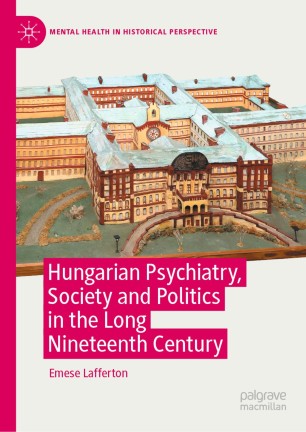
Emese Lafferton: Hungarian Psychiatry, Society and Politics in the Long Nineteenth Century, Cham: Palgrave Macmillan 2021. ISBN: 978-3-030-85708-0

Introduction

This book provides the first comprehensive study of the history of Hungarian psychiatry between 1850 and 1920, placed in both an Austro-Hungarian and wider European comparative framework. Taking an interdisciplinary approach, the book captures the institutional worlds of the different types of psychiatric institutions intertwined with the intellectual history of mental illness and the micro-historical study of everyday institutional practice. It uncovers the ways in which psychiatrists gradually organised themselves and their profession, defined their field and role, claimed expertise within the medical sciences, lobbied for legal reform and the establishment of psychiatric institutions, fought for university positions, the establishment of departments and specialised psychiatric teaching. Beyond this story of increasing professionalization, this study also explores how psychiatry became invested in social critique. It shows how psychiatry gradually moved beyond its closely defined disciplinary borders and became a public arena, with psychiatrists broadening their focus from individual patients to society at large, whether through mass publications or participation in popular social movements. Finally, the book examines how psychiatry began to influence the concept of mental health during the first decades of the twentieth century, against the rich social and cultural context of fin-de-siècle Budapest and the Austro-Hungarian Dual Monarchy.

ToC

Front Matter

Pages i-xviii

PDF

Introduction

Emese Lafferton

Pages 1-17

Histories of Psychiatry and the Hungarian Model

Emese Lafferton

Pages 19-99

The Bourgeois Family World of the Private Asylum: The Schwartzer Enterprise from 1850

Emese Lafferton

Pages 101-146

The Kingdom in Miniature: Public Mental Asylums from the 1860s

Emese Lafferton

Pages 147-191

The University Clinic and the Birth of Biological Psychiatry. Academic Research, Teaching and Therapy from the 1880s

Emese Lafferton

Pages 193-244

Fragmenting Institutional Landscape. Alternatives of Specialised Institutions, Colonies and Family Care on the Turn-of-the-Century

Emese Lafferton

Pages 245-289

Asylum Statistics and the Psycho-Social Reality of the Hungarian Kingdom

Emese Lafferton

Pages 291-328

Invading the Public and the Private: The Hygiene of Everyday Life, Shell-Shock and the Politics of Turn-of-the-Century Psychiatric Expertise

Emese Lafferton

Pages 329-368

Conclusion

Emese Lafferton

Pages 369-384

Back Matter

Pages 385-442

Dagnosław Demski, Dominika Czarnecka (eds.) Staged Otherness: Ethnic Shows in Central and Eastern Europe, 1850–1939. Budapest, Baltimore: CEU Press 2021. ISBN: 978-963-386-439-5


Description

The cultural phenomenon of exhibiting non-European people in front of the European audiences in the 19th and 20th century was concentrated in the metropolises in the western part of the continent. Nevertheless, traveling ethnic troupes and temporary exhibitions of non-European humans took place also in territories located to the east of the Oder river and Austria. The contributors to this edited volume present practices of ethnographic shows in Russia, Poland, Czechia, Slovenia, Hungary, Germany, Romania, and Austria and discuss the reactions of local audiences. The essays offer critical arguments to rethink narratives of cultural encounters in the context of ethnic shows. By demonstrating the many ways in which the western models and customs were reshaped, developed, and contested in Central and Eastern European contexts, the authors argue that the dominant way of characterizing these performances as “human zoos” is too narrow. 


The contributors had to tackle the difficult task of finding traces other than faint copies of official press releases by the tour organizers. The original source material was drawn from local archives, museums, and newspapers of the discussed period. A unique feature of the volume is the rich amount of images that complement every single case study of ethnic shows.


Table of contents

Acknowledgments


1. Dominika Czarnecka and Dagnosław Demski

INTRODUCTION: FROM WESTERN TO PERIPHERAL VOICES


PART ONE

European Versus Indigenous Agency


2. Hilke Thode-Arora

THE HAGENBECK ETHNIC SHOWS: RECRUITMENT, ORGANIZATION, AND ACADEMIC AND POPULAR RESPONSE


3. Bodhari Warsame

A BRIEF HISTORY OF STAGING SOMALI ETHNOGRAPHIC PERFORMING TROUPES IN EUROPE (1885–1930)


4. Markéta Křížová

“WILD CHAMACOCO” AND THE CZECHS: THE DOUBLE-EDGED ETHNOGRAPHIC SHOW OF VOJTĚCH FRIČ, 1908–9


5. Evgeny Savitsky

WHY HIDDEN EARS MATTER? ON KALINTSOV’S SAMOYED EXHIBITION IN VIENNA, 1882


PART TWO

Performing the Ethnographic Other


6. Dagnosław Demski

(ETHNO-)DRAMA OF EXOTICISM. ETHNIC SHOWS AS A MEDIUM


7. Dominika Czarnecka

HOW DO THESE “EXOTIC” BODIES MOVE? ETHNOGRAPHIC SHOWS AND CONSTRUCTING OTHERNESS IN THE POLISH-LANGUAGE PRESS, 1880–1914


8. Kamila Baraniecka-Olszewska

THE WORLD OF CREATION: POLISH- AND GERMAN-LANGUAGE PRESS ACCOUNTS OF ETHNOGRAPHIC SHOWS IN CIRCUS PERFORMANCES IN UPPER SILESIA DURING THE FIRST DECADES OF THE TWENTIETH CENTURY


PART THREE

Across Local Contexts


9. Andreja Mesarič 

RACIALIZED PERFORMANCE AND THE CONSTRUCTION OF SLOVENE WHITENESS: ETHNOGRAPHIC SHOWS AND CIRCUS ACTS ON THE HABSBURG PERIPHERY, 1880–1914


10. Maria Leskinen

A CENTURY OF ELISION? ETHNIC SHOWS IN SAINT PETERSBURG AND MOSCOW, 1879–1914


11. Izabela Kopania

“WHEN WINTER ARRIVES, THE SINHALESE GO BACK TO CEYLON AND THEIR ELEPHANTS GO TO HAMBURG.” HAGENBECK’S SINHALESE CARAVANS AND ETHNOGRAPHIC IMAGERY IN THE POLISH PRESS DURING THE PARTITION ERA


12. Timea Barabas

THE CALL OF THE WILD: A SOCIOLOGICAL SKETCH OF BUFFALO BILL’S WILD WEST IN BANAT AND TRANSYLVANIA


13. István Sántha

“STAGED OTHERNESS” IN SAINT PETERSBURG


Epilogue


List of Contributors


Index

Antonie Doležalová: Mikuláš Teich: Moje století (1918-2018): Intelektuální biografie v dialogu [Mikuláš Teich: My Century 1918-2018. Intellectual Biography in a Dialogue]. Praha: Galén 2021. ISBN: 9788074925030

 Antonie Doležalová: Mikuláš Teich: Moje století (1918-2018): Intelektuální biografie v dialogu [Mikuláš Teich: My Century 1918-2018. Intellectual Biography in a Dialogue]. Praha: Galén 2021. ISBN: 9788074925030


Život Mikuláše Teicha byl dlouhý doslova jako jedno století. Narodil se ještě za Rakouska-Uherska a vyrůstal v masarykovském Československu, které nikdy nepřestal obdivovat. Přesto republiku dvakrát opustil. Poprvé v roce 1939 kvůli svému židovskému původu - s falešným pasem vlakem z Ružomberku. Podruhé v roce 1968 kvůli svému marxistickému přesvědčení - vlakem ze Smíchovského nádraží v Praze jen několik dní po sovětské invazi. Pokaždé se jeho novým domovem stala Velká Británie. Ač nikdy nepřestal litovat, že se v Praze nestal lékařem, v Británii se stal zakládajícím členem nejmladší koleje na univerzitě v Cambridge, Robinson College. Spolupracoval a přátelil se s nejvýznamnějšími světovými představiteli svého oboru - dějin přírodních věd. V poválečném Československu se jeho osudy dramaticky proťaly s osudy nejmocnějších představitelů komunistického režimu i jeho reformátorů.


Arkadiusz S. Więch: Della Croce. Życie i działalność Stanisława Krzyżanowskiego (1865-1917) [Della croce: Life and work of Stanisław Krzyżanowski (1865-1917)].

Arkadiusz S. Więch: Della Croce. Życie i działalność Stanisława Krzyżanowskiego (1865-1917) [Della croce: Life and work of Stanisław Krzyżan...